| |
|
|
Optics Myth 3:Bigger binoculars are brighter.
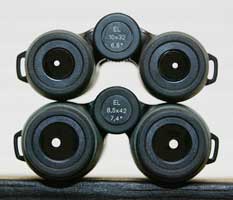
REALITY - Bigger can be brighter, but only in dim light! Many people buy 42mm or larger binoculars in hopes of getting the maximum brightness. But in ordinary light, a good-quality 32mm binocular delivers all the light a person can use, producing just as bright an image as does a 42mm or even a 50mm binocular. And since it's smaller, weighs less, and usually costs less, a 32mm binocular is certainly worth considering, at least for daytime birding.
It's a matter of how much light gets into your eye. Getting darkness adjusted takes most people's eyes at least half an hour. Furthermore, as we age, our pupils lose the ability to dilate as much as they did when wewere young. Most middle-aged or older people's pupils don't widen enough in darkness to use the large exit pupil of 42mm or 50mm binoculars, and a 32mm binocular might be a better choice. For brightness, the coatings on the lenses matter much more than the binocular's size. Some of the light that enters your binocular gets absorbed by the glass or is reflected back and never reaches your eye. Higher-quality binoculars use special coatings that allow for nearly complete light transmission, whereas binoculars without coatings may lose as much as 50% of the light. As a result, a top-quality 25mm binocular can actually yield a much brighter image than a lower-quality 50mm binocular.The bottom line is that you can't judge a binocular's brightness by its size. ...next Copyright 2006 Michael and Diane Porter |
|
|
|
|
|