

| |
|
|
Squirrel Buster Plus
Squirrels see the food in your bird feeder, but they just can't get at it. Which means your birds get your feeder all to themselves. It's very satisfying to watch. Over a million happy clients (and well-fed birds) confirm that the patented Squirrel Buster™ system is truly squirrel proof! Holds 3 quarts of seed. Weight adjustable to help control unwanted birds as well as squirrels. Why it's squirrel proof
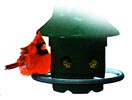
But when a squirrel climbs onto the feeder, its weight automatically forces the shroud down, closing the seed ports. Squirrels and large birds may be a little frustrated, but they are not harmed in way. See the blue bar at right for what makes it squirrel proof. Lifetime Hassle-Free Warranty Your Squirrel Buster Plus™ squirrel-proof bird feeder is guaranteed by the manufacturer to be free of material or manufacturing defects. The factory warranty applies when this product is used according to manufacturer's instructions and for the lifetime of the original owner. Chew proof, but cosmetic scratches from squirrels or damage from raccoons, bears or other animals are not covered by warranty. Cardinal friendly
It has a ring around the base to offer the kind of perch that cardinals like. Cleaning Clean bird feeders are as important to wild birds as clean dishes are to humans. Grimy bird feeders can be a source of contamination that can be fatal to birds. Please help to spread the word about the need for clean, healthy wild bird feeders. The Squirrel Buster is designed to be completely DISHWASHER SAFE. If washing in the dishwasher, place the dismantled feeder components on the top rack of the dishwasher. Fill both the pre-wash and the main-wash sections of the detergent dispenser with your regular dishwasher detergent. Select either high temperature drying or an air-dry option. Use your regular washing cycle. What seed should I feed wild birds? Black Oil sunflower seed is a good all-round birdseed. Specialty wild bird stores carry seed blends and information specific to your area. A little guidance from these experts will help you attract more birds. Avoid blends that use fillers such as cracked corn, wheat and millet. These fillers are thrown to the ground by the birds and can attract unwanted species. When should I feed birds? Any time of the year is a good time to feed wild birds. Feeding birds during the fall and winter months helps them to survive the cold weather. nature's food supply is actually at its lowest in the spring, making it an important feeding season. During the summer, birds are establishing their territory, nesting and raising young. This is a time of high activity for the birds and a steady supply of dry seed is a welcome addition to their diet. What happens if I stop feeding the birds? Mother nature has always provided for the birds. Birdseed from feeders is a bonus for wild birds and provides only a part of their nutritional needs. If you stop feeding the birds, they will continue to feed from natural sources just as they did before you began feeding them. Do metal perches cause any harm? There is some concern that birds' feet will stick to metal perches in freezing weather. This cannot and does not happen. Birds do not have sweat glands in their feet and never stick to metal objects such as utility wires, metal fences or radio and TV antennas. What about chipmunks, raccoons, bears and other animals? Squirrel Buster Plus is absolutely squirrel proof but is not designed to deter chipmunks, raccoons, bears and other critters that can damage the feeder. Raccoons can damage the feeder when they drop it to the ground and roll it around to extract the seed. Latch you feeder with a snap hook to avoid raccoon damage. Birdseed is attractive to a wide variety of wild animals. Usually these animals are nocturnal. If you have a problem we recommend that you take your feeder in at night.
—Diane Porter |
|













 Use the feeder with the factory setting before making any adjustments. A small red squirrel, 4 oz./115g, will trigger the closing mechanism at this setting.
  To increase the adjustment setting, rotate the transparent cartridge clockwise. The red line will move down from the previous setting. This increases the weight required to close access to the seed.
 To decrease the adjustment setting, turn the cartridge counter clockwise. The red line will move up from the previous setting. This decreases the weight required to close access to the seed.